The Sacred Rock of Classical Athens
The Acropolis citadel stands as a global symbol of classical democracy, Western philosophy, and architectural mastery. Erected on a natural limestone plateau rising 150 meters above the Athenian basin, it has served as a royal fortress, religious sanctuary, and cultural beacon for over three millennia.
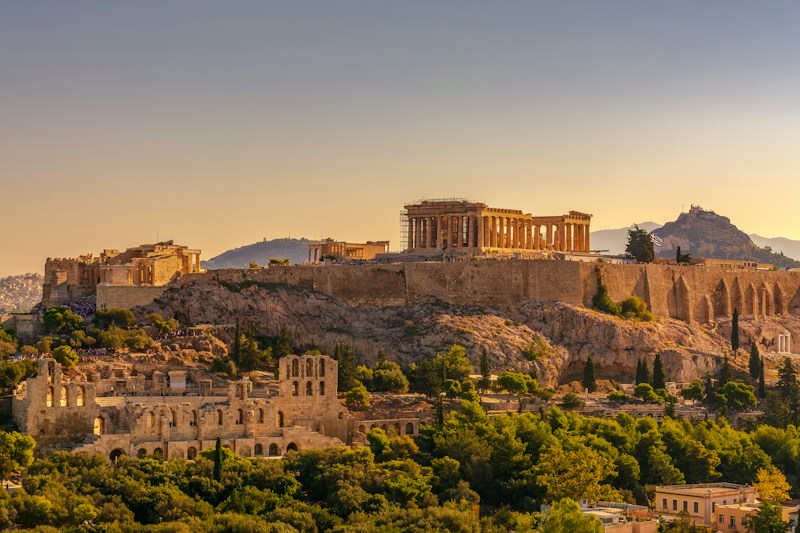
Key Architectural Masterpieces
The Parthenon
Dedicated to Athena Parthenos. Built entirely of marble without mortar, utilizing hidden iron clamps. Famous for its 8x17 column arrangement and optical refinements.
The Erechtheion
An intricate Ionic temple constructed on uneven terrain. Features the world-famous Porch of the Maidens, supported by six draped female Caryatid statues.
The Propylaea
The monumental gateway serving as the official entrance to the sanctuary. Blends Doric and Ionic column styles to create a dramatic transitional corridor.
Temple of Athena Nike
A prominent Ionic structure perched on the southwest bastion, constructed to celebrate Athenian naval victories over Persian forces.
Theatre of Dionysus
Nestled on the southern slope, this open-air auditorium is celebrated as the historical birthplace of Western drama and theatrical tragedy.
Odeon of Herodes Atticus
A Roman-era stone amphitheater built in 161 AD by Herodes Atticus. Restored in the 1950s, it continues to host live musical events today.
Acropolis Mythology vs Historical Fact
Myth: The Contest for Athens
According to myth, Poseidon struck a rock on the Acropolis with his trident to create a saltwater spring, while Athena planted the first olive tree. Citizens chose Athena as their patron deity.
Fact: Strategic Natural Stronghold
Archaeological excavations confirm the hill was inhabited as early as the Neolithic era (4000 BC) due to its defensible steep cliffs and internal natural freshwater springs.
Fact: Multi-Color Classical Statues
While marble structures appear pure white today, chemical residue analysis proves statues and friezes were originally painted in vivid blues, reds, and golds.
Historical Timeline
Construction of the Parthenon
Built in just 15 years under Phidias, Ictinus, and Callicrates during the height of Athenian political dominance.
Conversion to Christian Basilica
The Parthenon was rededicated to the Virgin Mary (Panagia Athiniotissa), leading to internal altar reconfigurations.
Venetian Siege Damage
A Venetian mortar shell struck gunpowder stored inside the Parthenon, causing a major explosion that collapsed central columns.
UNESCO Listing & Titanium Restoration
Inscribed as a UNESCO World Heritage Site. Restoration programs replace expanding iron clamps with non-corrosive titanium.
Explore these historic grounds in person
Review entry guidance or browse certified tour operators on independent booking platforms.
Read Visitor Entry Guide View Tour Options